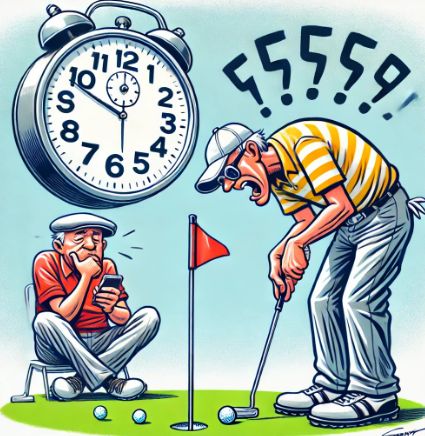
If you cannot see the group in front of you, you have fallen behind pick up the pace
Just because you finished under 4 hours does not mean you kept pace. You could have finished in 3.5 hours . KEEP IT MOVING
The Old Way vs. The Ready Golf Way
To truly grasp the concept, it helps to see a direct comparison. Imagine you and your friend, Tim, both hit your drives into the fairway. Your ball is 20 yards behind his.
- The Traditional Way: You have to play first. Tim stands off to the side, maybe chatting or just watching. He doesn't even think about his shot until after you've hit. While you walk up to the green, he then begins his process: getting the yardage, choosing a club, taking practice swings, and finally hitting. There's a lot of sequential waiting.
- The Ready Golf Way: As you both walk towards your golf balls, you're each preparing for your next shot a little differently. You quickly get your distance and are ready to hit. But Tim, even though he's closer to the hole, also went right to his ball and is ready to go as well. Since there’s no one in front of him and he doesn't have to wait on you a ton, he might even hit first. A quick "Hey, mind if I go?" is all it takes. As he hits, you can continue your final preparations without wasting a moment. By the time he's done, you're ready to swing. The "downtime" is almost completely eliminated.
Ready golf is about teamwork and awareness. It’s a shared agreement within a group to keep things moving. While it's not typically used in serious stroke-play tournaments, it's widely encouraged in casual rounds, scrambles, and friendly matches to combat the five-hour round.
How to Play Ready Golf: A Hole-by-Hole Guide
For ready golf to work, it has to be applied throughout the entire hole. Here’s a breakdown of how you can implement these principles from tee to green.
On the Tee Box
The tee box is the first opportunity to set a good pace. Instead of sticking rigidly to the idea of "honors," be more practical.
- Be Prepared: Don’t wait until it’s your turn to get a tee and ball out of your bag. When you arrive at the tee box, get everything ready to go so you can step up as soon as it’s clear.
- Flexible Order: If the person with honors is still getting their driver or finishing writing down their score, and you’re ready, ask if you can go ahead. Often, they’ll be happy to let you.
- Shorter Hitters Go First: On a long par-4 or par-5 where long hitters in your group have to wait for the group ahead to clear the fairway, shorter hitters should be encouraged to hit. Their shots won't reach the group ahead, and it saves valuable time.
In the Fairway and Rough
This is where ready golf makes the biggest impact on pace of play. The traditional "farthest from the hole plays first" rule can create significant delays. Here’s how to do it differently.
- Go Directly to Your Ball: This seems obvious, but many golfers follow the "cart path" or drift towards their partners' shots. If you can, walk directly to your own ball. This is your first priority.
- Get Your Yardage Immediately: As you approach your ball, get out your rangefinder or check your GPS. Determine the club you need before it's your turn to hit.
- Play When Ready (and Safe): If you’re ready to play and the player farthest from the hole is still searching for their ball or taking a long time, go ahead and hit. A simple verbal cue like, "I'm ready when you are," or, "Okay if I go ahead?" communicates your intention without being pushy. Playing your shot allows other players the time to find their ball or prepare.
- Strategic Hitting: Two players can even hit at nearly the same time if they are on opposite sides of the fairway and not a danger to one another. Again, safety and awareness are everything.
Around and on the Putting Green
The green is another pace-of-play killer. Fussy marking, painstaking reads from every angle, and strict adherence to the "farthest-out" rule add up. Ready golf streamlines this.
- Chipping and Pitching: The same fairway principles apply. If you have a straightforward chip and are ready to go, play your shot, even if someone is farther away but dealing with a more complex shot from a bunker.
- Prepare your putt: Instead of waiting for every single player to hit onto the green before you start analyzing your putt, begin your read as you approach the green. By the time it’s your turn, your preparation should be mostly done.
- Promote "Continuous Putting": This is a massive time-saver. If you hit a putt to within a foot or two of the hole, go ahead and tap it in. Don't waste time marking it, cleaning it, and waiting for three other people to putt before you tap in from 18 inches. Simply ask, "Mind if I finish out?" to make sure you're not walking in another player's line.
- The First One Done: Once you've holed out, don’t just stand there. Step off the green, clean your putter, and get ready for the next tee. If a bunker needs raking, the first person to finish can do it while the others are still putting.